
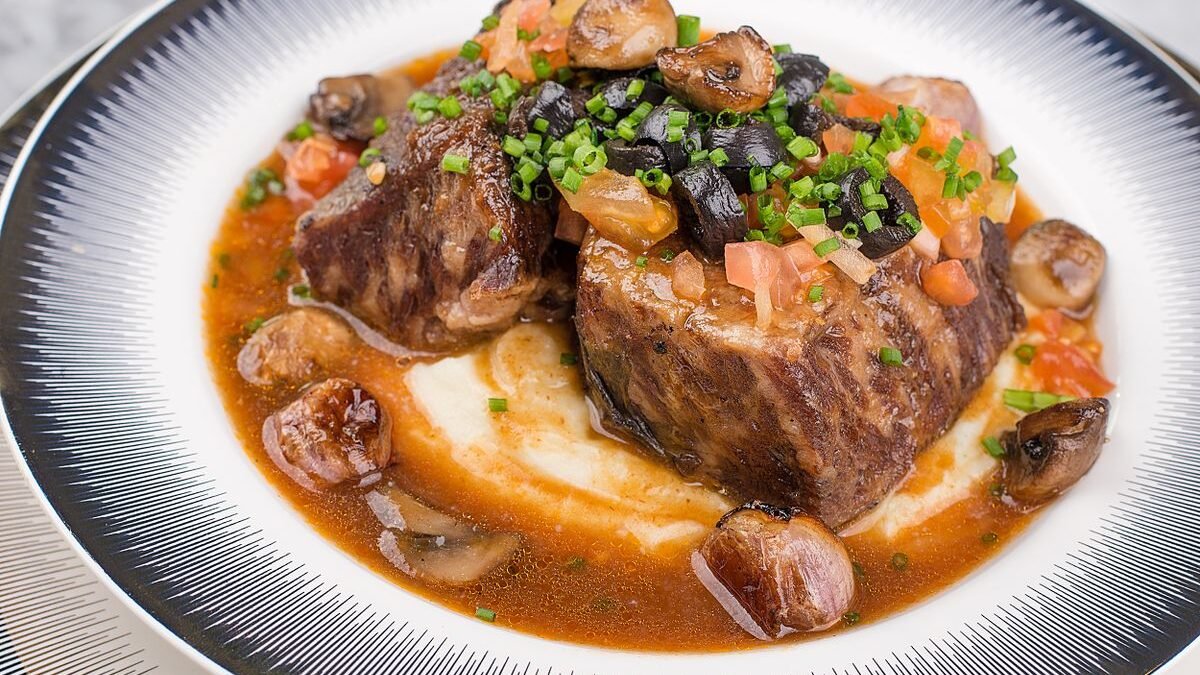
Some dishes are made for cold, dark evenings, and a pot of braised short ribs is near the top of the list. A deep sear builds the flavor, then a long, low braise in red wine does the rest, turning tough ribs meltingly soft in a glossy, deeply savory sauce. It looks like a lot of work; it really is not.
What makes them fall apart
Sear the ribs hard for a genuine crust — that browning is where the flavor starts. Use a wine you would actually drink, since it reduces into the sauce, then keep the oven low and slow so the connective tissue breaks down into silk over a few unhurried hours.
Even better tomorrow
Short ribs love a head start. Cool them right in the sauce, chill overnight, lift off the firm layer of fat, and gently reheat. The flavor deepens and dinner becomes effortless.
What to put underneath
Mashed potatoes, soft polenta, or buttered egg noodles all catch that sauce beautifully. A simple green vegetable on the side keeps things balanced.
Give the ribs space during the browning stage
Brown in batches if the pot is small. Crowding the meat releases moisture and makes it harder to build a browned surface. Keep the browned bits unless they are burnt, then use the recipe liquid to loosen them.
During braising, use the tenderness cue as well as the approximate time. Rib size and the pot affect cooking. Avoid a hard boil that rapidly reduces the liquid before the meat becomes tender.
Can I omit the wine?
A wine-free version would need a different liquid and acidity balance, so it is not a tested direct swap. Also, do not assume a wine-based dish is alcohol-free simply because it has been cooked.
More recipes to try
- Crispy Garlic Roasted Cauliflower (Golden & Caramelized)
- Baked Pumpkin Risotto (No-Stir, Oven-Made)
Editorial note: RecipeLeaf has not independently kitchen-tested this recipe. Preparation times and yield are estimates; use visual doneness cues and applicable food-safety guidance. The featured image is an illustrative representation.