
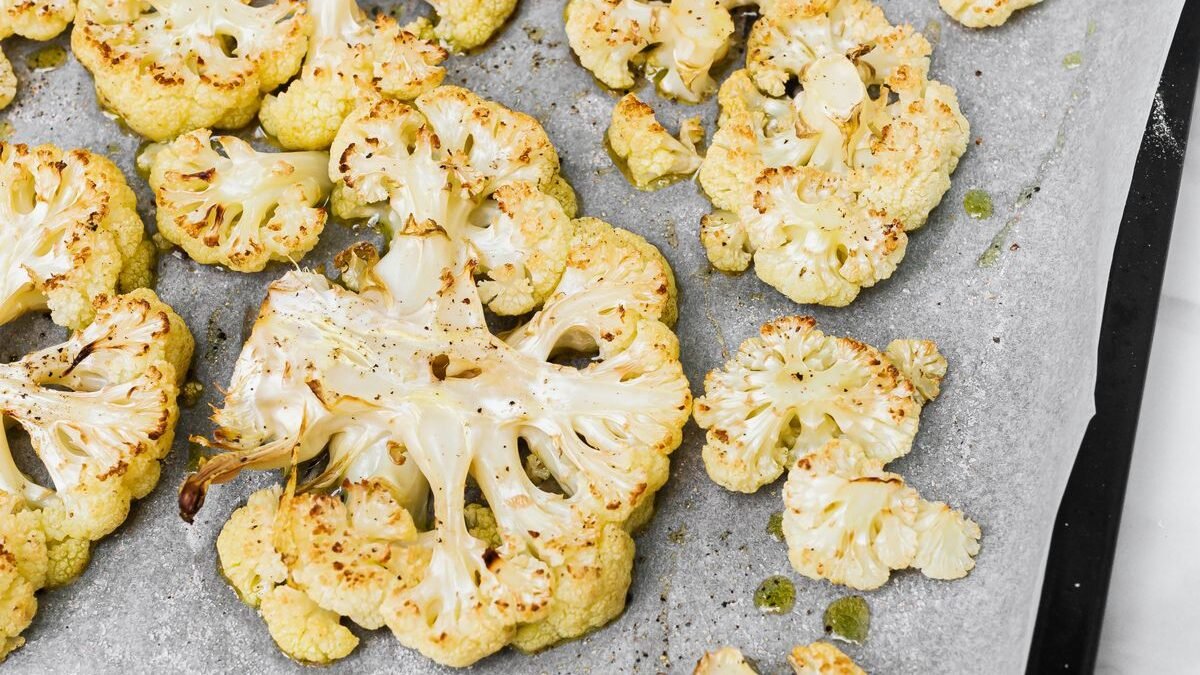
Roasting is where cauliflower stops being boring. Cranked up high with garlic and good olive oil, the florets caramelize into nutty, crackly-edged morsels — the kind that never quite make it from the sheet pan to the table intact.
Crispy, never soggy
Three things matter: dry the florets well, give them room to breathe on the pan, and roast hot at 425°F. Crowding traps steam and steam is the enemy of browning, so spread them out and flip once for even color.
Easy flavor spins
- Parmesan-garlic: shower with grated parmesan for the last five minutes.
- Sweet heat: hit it with chili flakes and a drizzle of hot honey out of the oven.
- Lemon-herb: finish with lemon zest and chopped parsley.
How to serve it
Set out a creamy tahini or garlic-yogurt dip and it becomes a shareable starter, or pile it next to roast chicken and grains for an easy dinner.
Why roasted cauliflower sometimes stays soft
Wet florets and a crowded pan encourage steaming. Dry the cauliflower after washing, cut the florets to a similar size, and leave room between them. Use a second tray rather than stacking pieces in a deep baking dish.
Place a cut side against the tray to give it direct contact with the hot surface. Let that side develop color before turning. If the garlic begins to darken faster than the cauliflower, keep a closer watch and adjust its position on the tray.
Can I use frozen cauliflower?
Frozen cauliflower releases more water, so do not expect exactly the same texture or cooking time. Follow the package handling instructions and give it plenty of space. The fresh-cauliflower method and timing should be treated as a starting point, not a tested frozen substitution.
More recipes to try
Editorial note: RecipeLeaf has not independently kitchen-tested this recipe. Preparation times and yield are estimates; use visual doneness cues and applicable food-safety guidance. The featured image is an illustrative representation.
1 Comment