
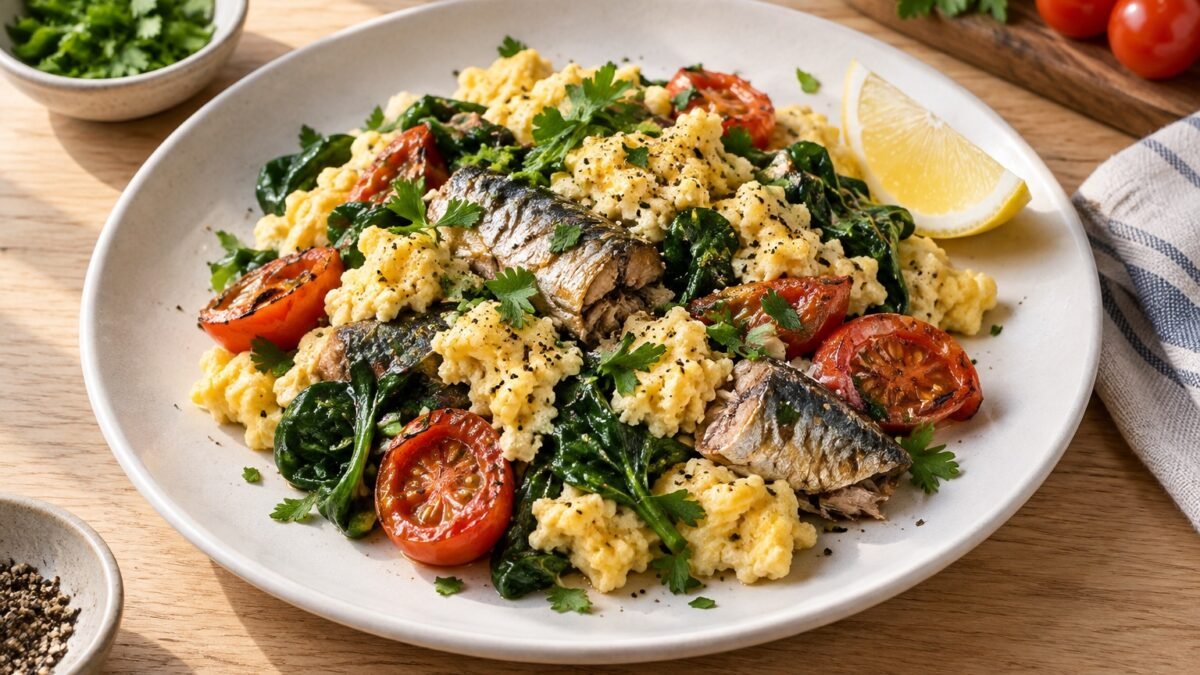
This sardine breakfast turns one can of fish, four eggs and a handful of vegetables into a warm skillet meal. The tomatoes soften first, the spinach wilts into the pan, and the sardines go in near the end so their flakes stay recognizable. Lemon and parsley keep the finish bright. It is a different way to use canned sardines when you want something warmer than toast.
What makes this breakfast work
Canned sardines are already cooked, so the main job is cooking the vegetables and eggs. Adding the fish late avoids reducing it to a paste. A nonstick skillet lets you use a small amount of oil, while medium-low heat after adding the eggs gives you time to fold the curds rather than brown them hard. Allow about 15 minutes from prep to serving, depending on your stove and how quickly the vegetables dry out.
Which canned sardines should you use?
Choose a plain can labeled fully cooked and ready to eat. Oil-packed sardines tend to have a richer flavor; water-packed fish gives you more control over the oil in the pan. Drain either type. Boneless, skinless sardines are convenient for a first try, while sardines with soft edible bones and skin have a more distinctive texture. Check the label for fish allergens and sodium, and taste the cooked dish before adding salt. This recipe is designed for canned fish, not fresh raw sardines.
Ingredient notes and easy swaps
The eggs provide the base, spinach adds a tender leafy texture, and cherry tomatoes bring moisture and acidity. Baby kale can replace spinach if you remove tough stems and give it longer to soften. Chopped chives can replace parsley. If using tomato-packed sardines, drain off excess sauce and add lemon gradually. Strongly smoked sardines will change the flavor, so use them only if that is the taste you want. These substitutions have not been tested by RecipeLeaf.
How to keep the eggs from becoming watery
Wash the spinach ahead and dry it well. Let the tomatoes soften before adding the leaves, then cook off visible liquid before pouring in the eggs. If the skillet is crowded with wet vegetables, the eggs can look cooked at the edges while liquid remains in the middle. Reduce the heat when the eggs enter the pan and use broad, gentle folds. Stop only when the eggs are set and safely cooked; a glossy surface should not mean pooled raw egg.
Serving ideas
Serve the breakfast on its own, with a slice of toasted sourdough, or alongside warm potatoes. A few cucumber slices make a cool contrast. Keep the plate simple because the fish already brings plenty of flavor. For a different canned-fish lunch, try our lemon sardine toast with capers and parsley. If you prefer a make-ahead breakfast for another day, see apple cinnamon overnight oats.
Storage and reheating
This skillet is best eaten freshly cooked. Refrigerate leftovers in a shallow covered container within 2 hours, or within 1 hour if the room is above 90°F (32°C). Keep the refrigerator at 40°F (4°C) or below and use leftovers within 3–4 days. Reheat to 165°F (74°C), stirring to eliminate cold spots. The eggs may become firmer when reheated. Do not store opened fish in its original can; transfer unused fish to a covered container and follow the can label.
Frequently asked questions
Can you eat sardines for breakfast?
Yes. Fully cooked canned sardines can be served as part of breakfast, including with eggs and vegetables. Choose fish you enjoy and adjust salt and lemon to its flavor. This recipe makes no individual nutrition or health claim.
Do canned sardines need to be cooked again?
Ready-to-eat canned sardines do not need cooking before eating. Here they are added to warm them through while the eggs finish. Follow the product label, and do not substitute raw sardines using the same timing.
Can I prepare this skillet the night before?
You can wash and dry the spinach, halve the tomatoes, and measure the seasoning ahead. Keep them refrigerated in separate covered containers. Cook the eggs and open the fish just before serving for the best texture.
Food handling reference: USDA leftovers and food safety.
RecipeLeaf editorial recipe: this recipe has not been kitchen-tested by RecipeLeaf. Times and yield are estimates. The image is an AI-generated illustration, not a photograph of a tested preparation.